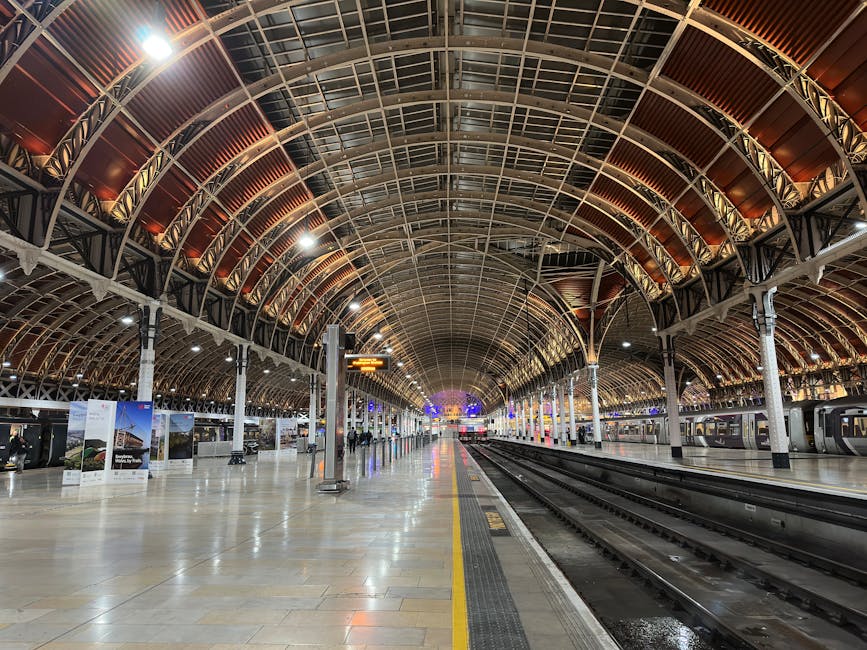
Paddington loading bay permits: Westminster Council rules
Posted on 10/06/2026
If you are moving in or out of Paddington, the loading bay question can make the difference between a smooth move and a stressful one. Westminster's rules around loading bays, waiting restrictions, and vehicle access can be a bit fiddly, and the practical reality is simple: if the van cannot stop legally and safely, everything slows down. That means more time, more friction, and sometimes avoidable costs.
This guide explains Paddington loading bay permits: Westminster Council rules in plain English. We will look at why they matter, how the process usually works, what kind of moves need extra planning, and the mistakes people make when they assume a bay is "just there." It is written for anyone organising house removals, flat moves, office removals, or a short man and van job around Paddington Station, Praed Street, Sussex Gardens, or the surrounding W2 streets.
If you want a broader sense of the area before moving, it can help to read our Paddington area guide or our notes on the best routes for W2 removals near Paddington Station. The streets are busy, the timing matters, and honestly, a little planning goes a long way.

Why Paddington loading bay permits: Westminster Council rules Matters
Paddington sits in one of the more awkward parts of central London for loading and unloading. You have station traffic, busy commuter flow, narrow residential streets, commercial activity, hotel arrivals, and a constant rhythm of vehicles coming and going. In that environment, a loading bay is not just a nice convenience. It is often the difference between an efficient move and a parking ticket waiting to happen.
Westminster Council rules matter because loading bays are usually managed spaces, not open parking. They may be time-limited, restricted to certain vehicle types, or governed by local traffic orders and enforcement controls. If your van is in the wrong place, even for what feels like "just ten minutes," you can find yourself in trouble. And yes, that can happen while you are carrying a sofa upstairs. Not ideal.
For removals, the impact is bigger than the fine itself. A blocked bay can mean:
- longer carrying distances from vehicle to property
- extra labour time
- delay to building access slots
- more pressure on neighbours, concierges, or reception staff
- greater risk of missed time windows
That is why people organising a move in Paddington often benefit from early planning, especially if they are already juggling keys, lift bookings, or building rules. If your move is part of a flat change, this sits neatly alongside guidance on flat removals in Paddington and house removals in Paddington.
Expert summary: if you are loading or unloading in Paddington, do not assume the nearest kerb space is available for use. In Westminster, the safest approach is to plan the vehicle stop first, then the move itself. That sounds obvious, but in practice people do it the other way round all the time.
How Paddington loading bay permits: Westminster Council rules Works
At a practical level, a loading bay permit or permission arrangement is about giving a vehicle legal space to stop for loading and unloading during a specific time period or under specific conditions. The exact setup can vary depending on the street, the bay markings, the day, and local restrictions in force at that location.
What matters for you is this: Westminster Council does not treat all kerbside stopping the same way. Some bays are dedicated loading bays, some are shared with other restrictions, and some streets have peak-hour or suspension rules. A location near Paddington Station may feel like a standard city street, but it can behave more like a constantly shifting access zone.
In many real moves, the process involves one or more of the following:
- Checking whether the vehicle can legally stop in the intended bay or at the property frontage.
- Confirming whether the bay is active at the time you need it.
- Finding out whether a permit, dispensation, or booking is needed in advance.
- Coordinating with any building management or concierge requirements.
- Making sure the removal team keeps within the allowed loading period.
That is the clean version. The messy version is the one most people experience. The van arrives, a bay is occupied, someone says "it should be fine," and then the driver has to decide whether to risk a stop or keep circling. By the time everyone has agreed on a plan, half an hour has vanished.
If your move involves specialist items, such as a piano or bulky furniture, the margin for error becomes even smaller. For example, our pages on piano removals in Paddington and furniture removals in Paddington reflect how much easier it is to work efficiently when vehicle access is sorted from the start.
It is also worth separating a few terms that get used interchangeably but are not always the same thing:
- Loading bay - a kerbside area intended for loading and unloading.
- Permit - formal permission to use a space under controlled conditions.
- Dispensation - a temporary allowance that may be granted in some circumstances.
- Suspension - temporary removal of normal parking or stopping rights in a bay.
To be fair, the naming can be a bit bureaucratic. The key thing is not the label; it is whether the vehicle can stop legally for the time you need.
Key Benefits and Practical Advantages
Getting the loading bay side right is not just about compliance. It also makes the whole move calmer and more predictable. That sounds small, but it really is not. A move is already full of moving parts: boxes, keys, lift timings, fragile items, and tired people. Remove one pressure point and the whole day feels easier.
Here are the main benefits of dealing properly with Westminster's loading bay rules:
- Better time control: you spend less time hunting for a legal stopping place.
- Lower risk of disruption: less chance of the van being moved on mid-load.
- Cleaner communication: everyone involved knows where the vehicle is going and when.
- Safer handling: shorter carrying distances usually mean fewer mishaps.
- More professional service: the move feels planned rather than improvised.
There is also a customer experience benefit. If you are moving out of a third-floor flat, perhaps with awkward stairs or a tight entrance, every extra metre between the van and the front door matters. That is why residents looking at same-day removals in Paddington often ask about access early, because same-day work leaves less room for surprises.
One other practical advantage: planning the loading bay properly can help you avoid the classic "double handling" problem, where items are carried from the property to one place, then moved again because the van could not stop close enough. It is tiring, inefficient, and frankly unnecessary if the access plan is done well.
And if you are comparing removal providers, access knowledge is part of the real value. It is not just a van and two people. It is route sense, timing, local judgement, and the ability to adapt quickly when Paddington does what Paddington does best: stay busy.
Who This Is For and When It Makes Sense
Paddington loading bay permits: Westminster Council rules matter to a wider group than most people think. This is not only for large house moves. In fact, some of the trickiest situations are smaller jobs, because people assume they will be simple and then leave access planning until the last minute.
You should think seriously about loading bay arrangements if you are:
- moving into or out of a flat in Paddington
- booking a house move with a removal van
- organising an office relocation or business delivery
- moving bulky furniture, boxes, or white goods
- using a man and van service in a controlled street
- working to a short access window set by a landlord, building manager, or concierge
It also makes sense if you are moving near busy roads around Praed Street, Sussex Gardens, or Paddington Basin, where traffic and parking conditions can change quickly. Our article on Praed Street moves touches on why these local conditions deserve more attention than they usually get.
For office relocations, the pressure can be a bit different. You may have staff waiting, computer equipment to move, and a building that wants the loading completed in a precise slot. In those cases, a late van is not just annoying; it affects a whole schedule. If that sounds familiar, see our office removals Paddington service information.
If you are a student moving from a rental flat, you might think the permit question is overkill. Sometimes it is, sometimes it is not. A small load can still need a valid stopping plan if the street is tightly controlled. Truth be told, the "small move" is often the one where people most underestimate access.
Step-by-Step Guidance
If you want to handle this properly, a structured approach is the easiest way to stay sane. Here is a practical sequence that works well for most Paddington moves.
- Identify the exact pick-up and drop-off points.
Do not work from the postcode alone. The difference between one side of a street and the other can matter for loading access. - Check the street layout and the nearest legal stopping option.
Look for marked loading bays, suspended bays, yellow line restrictions, and any signs governing the area. - Confirm the access window.
Some buildings allow limited move-in hours. Others care about lift bookings, reception cover, or noise controls. - Decide whether a formal permit or dispensation is needed.
This depends on the location and the specific restriction. If in doubt, do not assume. - Build the stopping plan into the move schedule.
It is easier to arrive with a plan than to improvise one while standing in the road. - Prepare the load order.
Put the biggest, most awkward, or most urgent items in a sensible sequence so the loading bay time is used efficiently. - Keep a fallback option.
If the bay is occupied or unavailable, know where the van can legally wait while you reassess.
A helpful habit is to think of the access question as part of the booking, not as an admin task for the morning of the move. That one shift in mindset saves a lot of scrambling later.
If your move is broad and involves packing, vehicles, storage, or a very tight timeline, it may be useful to review related pages such as removal services in Paddington and storage options in Paddington. Sometimes the smartest answer is not "load everything at once," but "stage it properly."
Expert Tips for Better Results
After enough local moves, a few patterns become obvious. The people who do best are not the ones who hope for the best. They are the ones who make the move easy to execute.
- Book access before the vehicle. It sounds backwards, but the space is what makes the vehicle useful.
- Use exact addresses, not vague descriptions. "Near Paddington" is not enough when bays are street-specific.
- Plan for a little buffer time. A bay that looks open can be occupied five minutes later. London being London.
- Tell everyone involved about the stopping point. Drivers, helpers, neighbours, building staff - all of them.
- Keep essential items separate. Keys, documents, chargers, kettle bits, and the first-night box should not be buried in the van.
There is also a big benefit in choosing a provider who understands local streets rather than one who treats every job like a postcode on a spreadsheet. For example, if you are weighing up options, pages such as man and van Paddington, man with van Paddington, and removal van Paddington can help you match the vehicle to the job.
One small but useful tip: if your move is in a high-footfall area around the station, try not to schedule the most access-sensitive part of the job at the exact same time as commuter peak flow. Even if the bay is legal, the surrounding congestion can still slow everything down. Not dramatic, just annoying. And annoying adds up.
Another thing people forget is the weather. A wet morning in Paddington can turn a short walk from bay to doorway into a slower, slipperier job, especially with heavy furniture. If you know rain is coming, build that into your timing. Common sense, yes. But easy to miss when the diary is packed.
Common Mistakes to Avoid
The biggest mistake is assuming a loading bay is available just because you can see one. That is the classic. The sign, the lines, the road markings, and the time restrictions all need to line up. A bay can look empty and still be unavailable for your vehicle or your time slot.
Other common mistakes include:
- leaving access planning until the move day
- not checking whether the property has its own rules on moving hours
- forgetting that bay restrictions can differ by day or time
- booking a vehicle that is too large for the access you actually have
- not allowing time for lift use, stairs, or hallway delays
- assuming the driver already knows the exact stopping point
There is also a subtle one: overpacking the van before the access point is confirmed. If the bay falls through, you may have a van full of items and nowhere sensible to place them. That is the sort of thing that turns a neat plan into a head-scratcher.
For bigger properties, it is worth reading move-specific support content like house removals in Paddington or packing and boxes in Paddington so the access plan and packing plan work together rather than against each other.
Let's face it: most moving problems are not dramatic disasters. They are small delays, repeated a few times. A bay occupied here, an overlong walk there, an extra trip, a missed key handover. Avoiding those small frictions is where the real win is.
Tools, Resources and Recommendations
You do not need a stack of fancy software to manage loading bay planning. What you do need is a simple, disciplined setup. The best tools are the ones that help you stay accurate and calm.
Useful things to have ready:
- Exact property notes: flat number, entrance details, concierge instructions, and lift information.
- Time window written down: not just "morning," but a realistic slot.
- Vehicle details: length, height, and any access constraints the driver needs to know.
- Contact list: landlord, agent, building manager, and the moving team.
- Floor plan or room order: helpful when unloading quickly into the right rooms.
If you are still comparing support options, take a look at our wider services overview and the practical guidance on pricing and quotes. Access problems often affect price and timing more than people expect, so it helps to be transparent early.
You may also find these pages relevant if your move has a specific shape:
And if you want reassurance about how the business works, you can also review our about us, insurance and safety, and health and safety policy pages. Those details matter when you are letting a team handle heavy items around traffic and kerbside restrictions.
Law, Compliance, Standards, or Best Practice
When we talk about Westminster Council rules, the safest way to think about it is as a combination of traffic regulation, local enforcement, and practical access control. The rules around stopping, waiting, loading, and unloading are not just "suggestions." They are enforceable conditions, and that is why planning matters.
There are a few best-practice principles worth keeping in mind:
- Do not stop where signs prohibit it. Even a short stop can create problems if the restriction applies.
- Do not rely on verbal guesses. "It should be fine" is not a rule.
- Allow for building rules as well as street rules. Both can apply at once.
- Keep the movement practical and safe. A legal stop that creates a hazardous unload is still a bad outcome.
For removal work, there is also a broader duty of care. Items should be handled safely, routes should be sensible, and loading should not create avoidable risk for pedestrians or staff. That is where a professional approach helps, especially in busy locations around Paddington station and the wider W2 area.
If you are reviewing a provider, useful trust signals include clear terms, sensible communication, and a visible approach to insurance and safety. Those elements do not replace local knowledge, but they do strengthen the overall service picture. You can see these themes reflected in our terms and conditions and complaints procedure pages.
In short: the best practice is not complicated. Check the restriction, plan the stop, communicate clearly, and keep the move within the allowed conditions. Simple on paper. Less simple on a busy morning, which is exactly why the prep matters.
Options, Methods, or Comparison Table
There is more than one way to handle access for a move in Paddington. The right method depends on how much you are moving, how tight the road is, and how formal the building rules are. Here is a practical comparison.
| Approach | Best for | Pros | Watch-outs |
|---|---|---|---|
| Use an existing loading bay | Short, well-timed moves with clear street markings | Quick, simple, often the least disruptive | Only works if the bay is actually available and permitted |
| Arrange a permit or dispensation | Moves in controlled streets or where formal permission is needed | More certainty, better planning, less risk of enforcement issues | Needs lead time and accurate details |
| Plan a kerbside unload from a legal waiting area | Flexible jobs where direct bay use is not possible | Can still work well if the walk is short | Longer carry distance, slower load/unload process |
| Use a larger managed move plan with building coordination | Office moves, larger flats, high-value items | Best for organised, multi-stage moves | Requires more communication and stricter timing |
If you are moving heavier household items, a short legal stop close to the entrance is usually the cleanest option. If you cannot secure that, it may still be workable, but the job should be planned around the extra carry and the extra time. That is the trade-off.
For more context on choosing the right scale of help, see removal companies in Paddington and removals in Paddington. Sometimes the best choice is not the cheapest visible option, but the one that understands the access side properly.
Case Study or Real-World Example
Here is a realistic Paddington scenario. A couple is moving out of a third-floor flat near Sussex Gardens. They have a lift, but it is shared, and the move has to happen before lunchtime because a cleaner is booked in after. The van can't just park anywhere because the nearest street is busy and the kerbside restriction changes through the day.
At first, they assume the driver can "just stop outside." Then they check the street more carefully and realise that the nearest apparent stopping point is not available for general unloading at the time they need. That tiny discovery changes everything. Instead of arriving and improvising, they coordinate the move, choose a legal loading position, and stagger the load so the heaviest items go first.
The result? Less stress, fewer awkward pauses, and a much cleaner handover. Nothing glamorous, but exactly what a move should feel like when it goes well. The hallways were still narrow, the morning was still busy, and there was still a bit of that peculiar London shuffle outside. But it worked.
This is also where local knowledge pays off. If the team knows the route, understands the likely pinch points, and keeps the access plan realistic, the whole day feels more manageable. Our article on Sussex Gardens to Paddington Basin move timelines is a good example of how small timing decisions can shape the whole job.
The big lesson is simple: a permit question is rarely just an admin question. It is part of the move design.
Practical Checklist
Use this before moving day. Keep it nearby. Yes, really.
- Confirm the exact pickup and delivery address
- Check whether the street has a loading bay and what the signs say
- Identify whether a permit, dispensation, or booking is needed
- Ask the building about move-in or move-out rules
- Tell the removal team about any access limits or lift bookings
- Plan for stairs, long corridors, or awkward doorways
- Keep key documents and valuables separate
- Build in buffer time for traffic or bay conflicts
- Make sure the vehicle size suits the street and the load
- Have a fallback plan if the bay is unavailable
If you are still at the planning stage, it may help to review packing and boxes Paddington and package and boxes Paddington so the physical move and the access plan line up neatly.
That is especially useful if you are trying to get the job done in one trip. One trip is nice. A smooth one-trip move is even nicer.
Conclusion
Paddington loading bay permits: Westminster Council rules are one of those topics that seem small until they are the reason a move goes sideways. The good news is that once you understand the basics, the process becomes much easier to manage. Check the street rules, confirm the loading option, plan around the access window, and avoid leaving the vehicle stop to chance.
In a busy part of London like Paddington, that bit of planning is worth real money and real peace of mind. It protects your schedule, reduces unnecessary carrying, and helps the whole day feel more controlled. And to be fair, a calm move is a rare and lovely thing.
If you are preparing a move and want help balancing access, timing, and vehicle choice, explore our wider removal support pages and make the process simpler from the start. A tidy plan now can save a lot of head-scratching later.
Get a free quote today and see how much you can save.
And if you are still in the middle of planning, take a breath. The rules are manageable. The day will pass. And with the right setup, it can go far more smoothly than you think.